Hospital & medical transport

Hospital and medical transport in Perth

Non-emergency accessible transport to hospitals, clinics, day surgeries and specialist rooms across Perth. Fiona Stanley alone runs to 783 beds across a campus the size of a suburb. Knowing which door you actually need is most of the job.

  • Every major Perth hospital
  • Wait-and-return available
  • Discharge transport
What we cover

Appointments, admissions and the trip home

We carry passengers to outpatient clinics, specialist rooms, imaging and pathology, pre-admission clinics, day surgery, rehabilitation and follow-ups. These are the routine, unglamorous journeys that make up most of anyone's contact with the health system.

This is non-emergency transport. We're not an ambulance, we don't carry stretcher patients, and there's no clinical care in transit. What we provide is an accessible vehicle, a driver who knows the campus, and a booking that holds when the appointment letter says 8:15am.

  • Outpatient, specialist and pre-admission appointments
  • Day surgery drop-off and collection
  • Hospital discharge and the trip home or back to care
  • Rehabilitation, dialysis, imaging, pathology and follow-ups
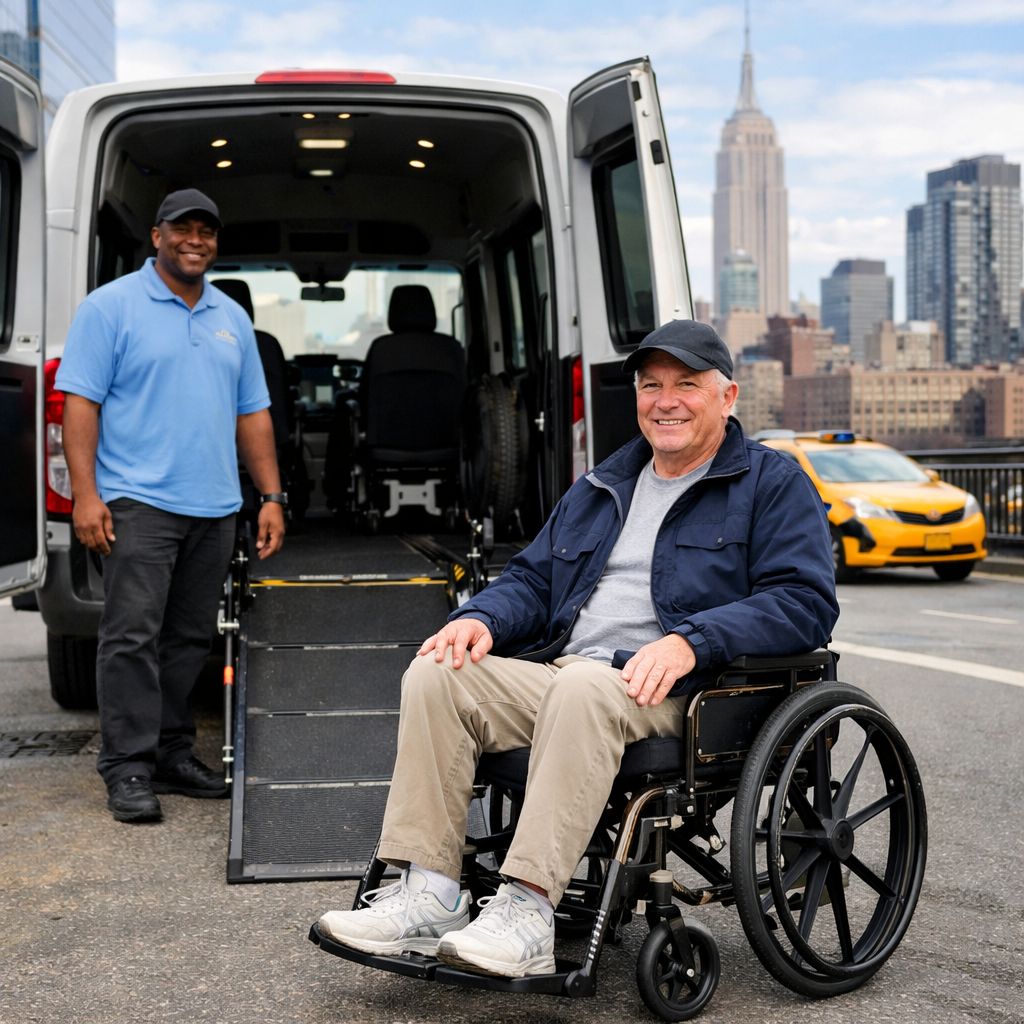
A uniformed driver assisting a smiling older man in a wheelchair beside an accessible ramp van.

Bring your appointment letter

It names the department, the clinic and usually the building. That's what tells us which of a dozen entrances to set you down at.

How it's booked

Three ways people use us for medical trips

The right booking depends on how long you'll be inside and whether you know when you're coming out.

Drop-off and pick-up

Two legs booked together. Best when the appointment has a predictable length, such as a specialist consultation, an imaging appointment or a clinic review.

Wait and return

The driver stays on site and takes you home the moment you're finished. Waiting time runs at the metered rate, so it suits short appointments rather than long ones.

Discharge transport

Called when you're actually ready to leave. Tell us the likely day and we'll keep a vehicle nearby rather than pretending a time guessed yesterday will hold.

Where we go

Perth hospitals we run to every week

Metropolitan public and private hospitals, plus the clinics, day-surgery centres and specialist rooms in between. If yours isn't listed, we almost certainly still go there.

Major public hospitals

  • Fiona Stanley Hospital, Murdoch
  • Royal Perth Hospital, Perth CBD
  • Sir Charles Gairdner Hospital, Nedlands
  • Perth Children's Hospital, Nedlands
  • Joondalup Health Campus, Joondalup
  • St John of God Midland Public, Midland
  • Rockingham General Hospital, Rockingham
  • Armadale Health Service, Mount Nasura

Private & specialist

  • St John of God Subiaco & Murdoch
  • Hollywood Private Hospital, Nedlands
  • Mount Hospital, Perth CBD
  • Bethesda Health Care, Claremont
  • King Edward Memorial Hospital, Subiaco
  • Osborne Park & Bentley Health Services

The QEII campus

Nedlands, three sites at one address

  • Sir Charles Gairdner Hospital
  • Perth Children's Hospital
  • Harry Perkins Institute
  • Outpatient clinics across multiple buildings

Also: community health centres, day-surgery centres, radiology and pathology collection points, and specialist consulting rooms right across the metro.

Why the entrance matters

A modern hospital is not one building

This is the practical difference between a transport service that has done this before and one that hasn't. Perth's big campuses are laid out for cars and staff, not for someone arriving fatigued in a wheelchair.

Distances inside a campus are real distances

Fiona Stanley Hospital at Murdoch carries 783 beds and includes the State Rehabilitation Service and the State Burns Service across a site you would not want to cross twice. The Queen Elizabeth II Medical Centre in Nedlands is three institutions sharing one address: Sir Charles Gairdner, Perth Children's Hospital and the Harry Perkins Institute, with outpatient clinics scattered across several buildings.

Being set down at the main entrance when your clinic is at the far end of the campus can add several hundred metres each way. If you're in pain, fatigued, or self-propelling a manual chair, that isn't a minor inconvenience. It's the difference between arriving composed and arriving wrecked.

Tell us the department, not just the hospital

Your appointment letter names the clinic and usually the building. Read us that line when you book and we'll set you down at the closest accessible entrance to it, then collect you from the same place afterwards rather than a general rank you'd have to travel to.

It's a thirty-second detail that saves more discomfort than anything else we do on these trips.

Discharge times move, and we plan for that

Booking discharge transport for a guessed time the day before almost never works. Pharmacy runs late, the round hasn't happened, the paperwork isn't signed. What works is telling us the likely day so we can keep a vehicle in the area, then calling when discharge is actually confirmed.

Ward staff, family members and the patient can all make that call. We'd much rather hold rough capacity for a day and come when you're genuinely ready than book a firm slot everybody knows is fiction.

What it costs

Fares, PTSS and NDIS funding

Metro trips run on the WA Government maximum metered rates with no accessibility surcharge, and pre-booked journeys can be quoted as a fixed price. A purple PTSS card pays 75% of the fare, up to a $35 subsidy, when you travel in your wheelchair in a wheelchair accessible taxi.

Good to know

Hospital & medical questions

One less thing to manage

Book accessible hospital transport

Give us the hospital, the department and the appointment time. We'll handle getting you there and back.

Call nowBook online